

Winter is manatee season on Florida’s Gulf Coast. When the water cools, these gentle giants gather in warm water refuges, and some of the best places to see them are an easy day out from Clearwater Beach.
The closest and easiest is Tampa Electric’s Manatee Viewing Center in Apollo Beach, which is free and open daily from November 1 to April 15. Closer still, Clearwater Marine Aquarium cares for rescued manatees right here in Clearwater. For a bigger adventure, the springs at Crystal River and Homosassa, up the Nature Coast, make a memorable full day trip.
We live here year round, and a cool, bright winter morning watching manatees surface is one of our favorite things to share with guests. Below is where to go, when to go, what it costs and how to watch them the right way. Every hour and price was checked with the official source on November 10, 2026.
| Spot | The short answer |
|---|---|
| Manatee Viewing Center | Apollo Beach, open daily November 1 to April 15, 10 am to 5 pm, free |
| Clearwater Marine Aquarium | Rescued manatees in rehab, right here in Clearwater |
| Three Sisters Springs | Crystal River boardwalk, 8:30 am to 4:30 pm, winter adult ticket $20 |
| Homosassa Springs | State park, 9 am to 5:30 pm, $13 adults, $5 ages 6 to 12 |
Why winter is manatee season
Manatees are warm blooded mammals, and cold water is dangerous for them. As the bays and the Gulf cool down in late fall, they leave open water and crowd into places where the water stays warm: natural springs, which hold a steady temperature all year, and the warm outflow from power plants.
That is what makes winter so special. Animals that are scattered and hard to spot in summer gather in a handful of predictable places. Tampa Electric says that when the water drops below 68 degrees Fahrenheit you are likely to see many manatees at its viewing center, and Crystal River gives the same advice for Three Sisters Springs: your best chance is a cold winter day, around high tide, after a cold front. So if a cold front blows through during your stay, that is your day to go.
Tampa Electric Manatee Viewing Center, Apollo Beach
This is the one we recommend first, especially with kids. Tampa Electric’s Big Bend Power Station pulls in water from Tampa Bay for cooling and sends it back clean and warm, and in winter manatees come in from the colder bay to gather in the discharge canal. The canal is a state and federally designated manatee sanctuary, and boardwalks and viewing platforms let you look right down on them without getting anywhere near the water.
A 900 foot accessible tidal walk ends with a view over the canal, and there is an education building, a cownose ray touch tank and a 50 foot observation tower. The center is on the south shore of Tampa Bay, so plan it as a half day outing, and check its live webcams before you leave to see whether the manatees are in.
Good to know: Open daily November 1 to April 15, 10 am to 5 pm; trails and tower close at 4 pm. Closed Thanksgiving Day, Christmas Day and Easter, and closes at 3 pm on Christmas Eve. Admission and parking are free. No pets, but service animals are welcome, and drones are not allowed. 6990 Dickman Road, Apollo Beach. Tampa Electric Manatee Viewing Center.
Clearwater Marine Aquarium
You do not have to leave Clearwater to learn about manatees. Clearwater Marine Aquarium rescues sick and injured marine animals along this coast, and its Dr. James “Buddy” Powell Manatee Rehabilitation Center gives rescued manatees the next stage of care before they go back to the wild. The center is open to the public.
When we checked in November, two young males, Axle and Gilbert, were recovering there. Axle was rescued from cold stress, and Gilbert as an orphaned calf, and the aquarium expects to release them in early 2027. It is a working hospital, so keep voices low and skip the flash.
Our guide to Clearwater Marine Aquarium covers tickets, parking and the rest of the visit, and it pairs well with our list of things to do with kids on a cooler day.
Good to know: Manatee viewing at the rehabilitation center depends on the patients’ care. Clearwater Marine Aquarium manatee center.
Seeing manatees from the water
Manatees live in our local bays and canals too, and guests at some of our waterfront homes tell us they have watched them surface right off the dock. Seeing one from a kayak or paddleboard is a thrill, but in winter the animals are resting and trying to stay warm, so this is where good manners matter most.
If you want a guided trip, book with an established local outfitter that briefs you on the rules before you launch; our boat rentals and charters guide is a good place to start, and our dolphin tours guide covers the boat trips that often spot both. The Florida Fish and Wildlife Conservation Commission (FWC) asks paddlers to keep their distance, never paddle over resting manatees, and back away if one comes to the boat. FWC guidelines for paddlers.
Look for the footprint. A manatee swimming just below the surface leaves a smooth, round patch on the water, and you will often hear the soft puff of a breath before you see a snout. Stay still and quiet, and let them come up in their own time.
Day trip: Three Sisters Springs, Crystal River
If you have a free day and a car, drive up the Nature Coast to Crystal River. Three Sisters Springs is part of the Crystal River National Wildlife Refuge and is famous as a winter sanctuary for manatees. The spring water is clear, so on a cold morning you can look down from the boardwalk and watch dozens of them resting in the basin.
Land visitors see the springs from a boardwalk run by the City of Crystal River. There is no parking at the springs themselves, so you buy tickets and park at the Three Sisters Springs Center, 917 Three Sisters Springs Trail. Paddlers cannot enter the springs during manatee season, and the U.S. Fish and Wildlife Service can close in water access when the Gulf turns very cold, which is another reason the boardwalk is the easy choice in winter. Parts of the boardwalk are being rebuilt, so check the city’s site the week you go.
Good to know: Boardwalk open daily 8:30 am to 4:30 pm; last entry and ticket sales 3:30 pm. Winter rates (November 15 to March 31): adults $20, seniors 55 and over $17.50, military $15, children 6 to 15 $7.50, 5 and under free. No pets. City of Crystal River tickets. Best viewing tips: Three Sisters Springs FAQs.
Add on: Homosassa Springs Wildlife State Park
A short drive south of Crystal River, Ellie Schiller Homosassa Springs Wildlife State Park has resident manatees in its main spring, and in winter wild manatees can join them from the river. The park’s floating underwater observatory, the Fish Bowl, lets you watch fish and manatees from below the surface, and rangers give manatee programs, usually at 11 am and 1 pm. The park is open daily from 9 am to 5:30 pm, ticket counters close at 4:45 pm, and admission is $13 for ages 13 and up, $5 for ages 6 to 12, and free for 5 and under. The park says its shuttle boats are currently unavailable because of low water, and the observatory has had maintenance closures, so check before you go. Florida State Parks: Homosassa Springs.
Manatee manners and the law
Manatees are protected by federal law under the Marine Mammal Protection Act and the Endangered Species Act, and by the Florida Manatee Sanctuary Act, which makes it unlawful to annoy, molest, harass or disturb a manatee. FWC sums up the right approach in four words: look, but don’t touch.
In practice, that means never touching, feeding or giving water to a manatee, not chasing one that moves away, never coming between a mother and her calf, keeping noise and splashing down, and staying out of any area posted as a no entry manatee refuge. If a manatee changes what it is doing because of you, you are too close.
Good to know: Harassing a manatee can bring state and federal fines and even jail time. If you see an injured, sick or dead manatee, call FWC’s Wildlife Alert line at 888-404-3922. FWC manatee viewing guidelines.
Tips for great manatee photos
Manatees spend a lot of time resting near the bottom, so the best pictures come from patience rather than a fancy lens. Shoot from a high spot like a boardwalk or tower, use polarized sunglasses or a polarizing filter to cut the glare, and wait for a snout to break the surface. Late morning light on a calm, cold day is ideal. Turn the flash off and never lean over rails to get closer.
If your trip runs into the new year, our snowbird guide to Clearwater Beach has more ideas for a long winter stay, and our guide to Clearwater Beach in winter covers the weather and what to pack.
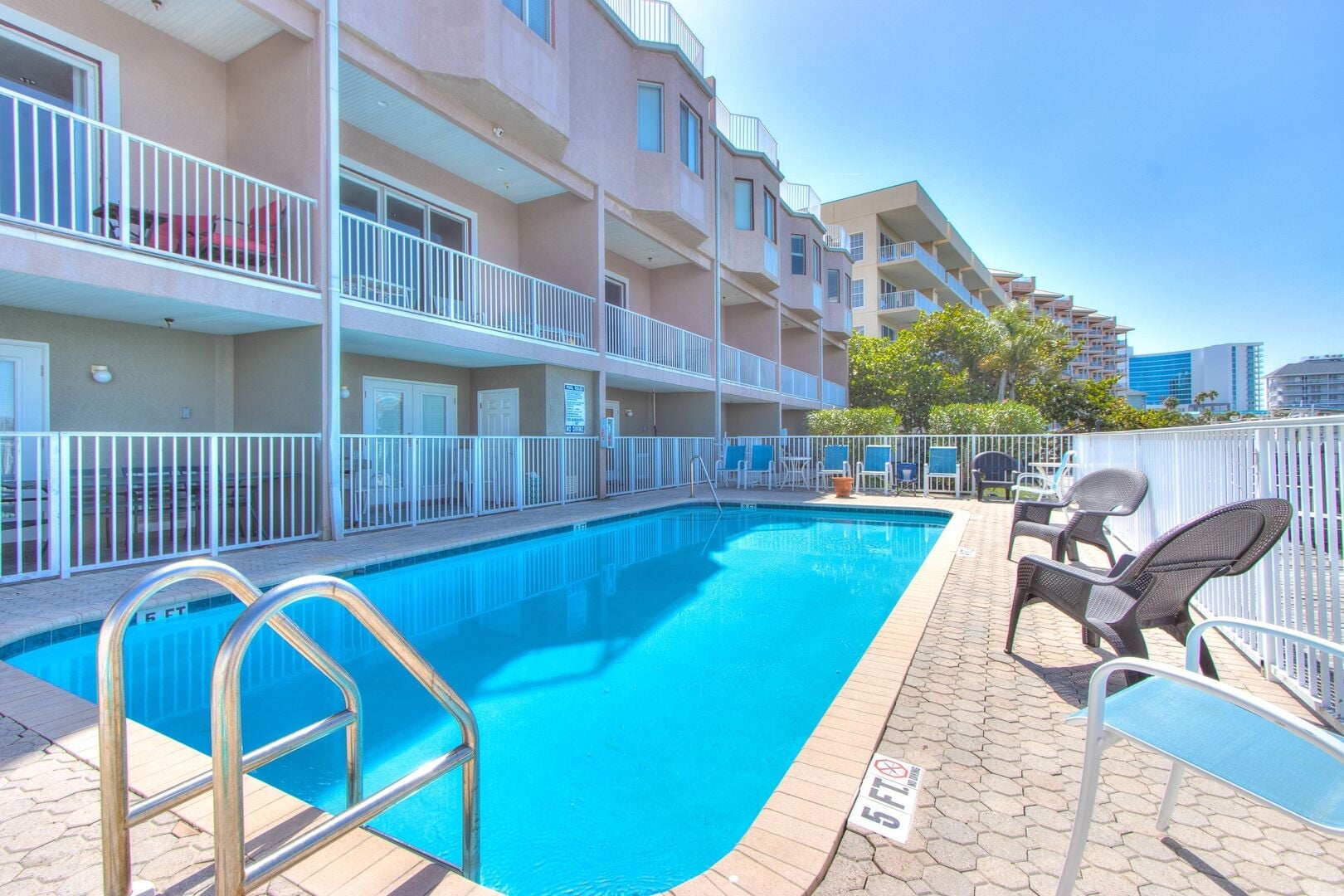
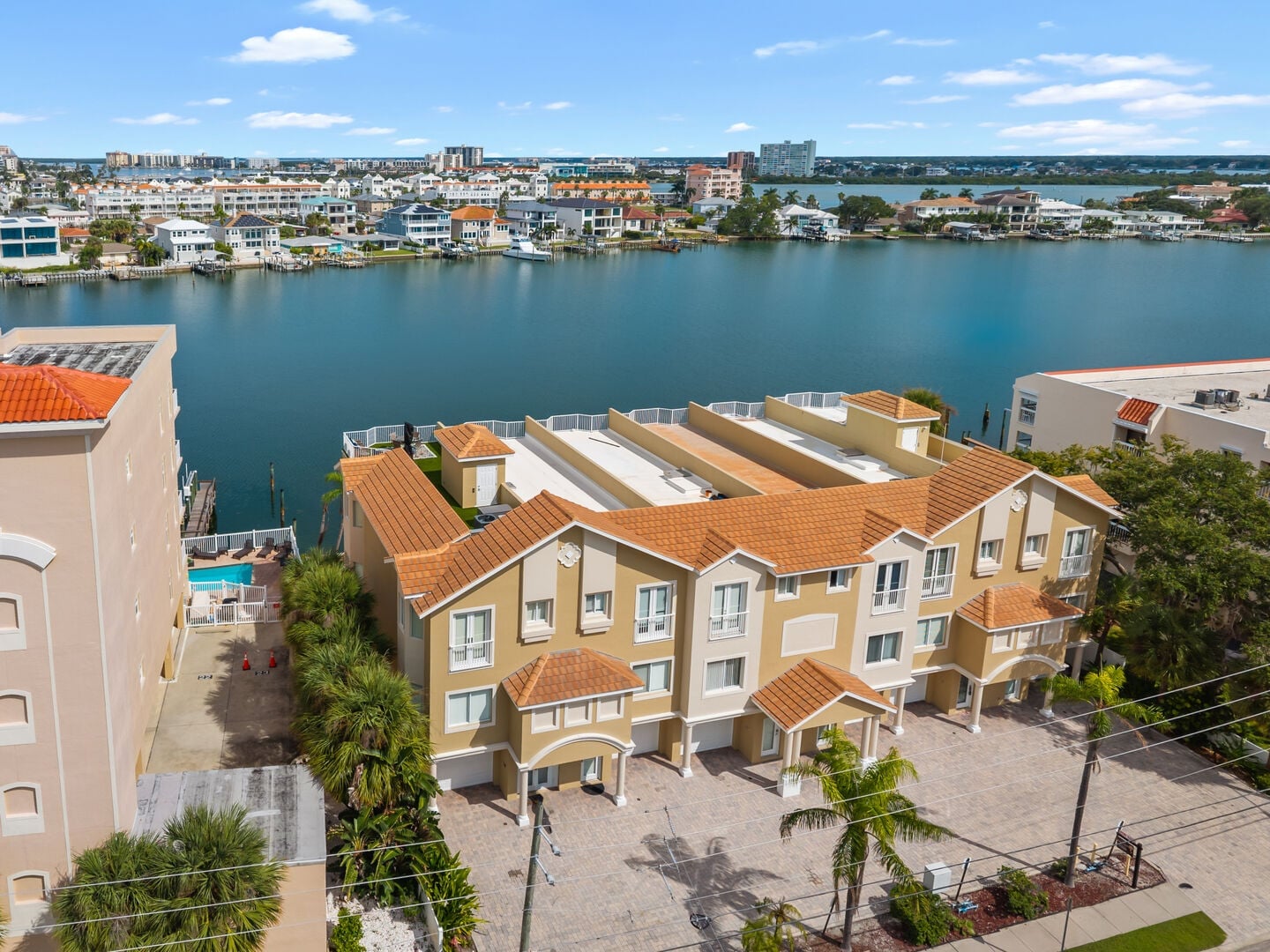
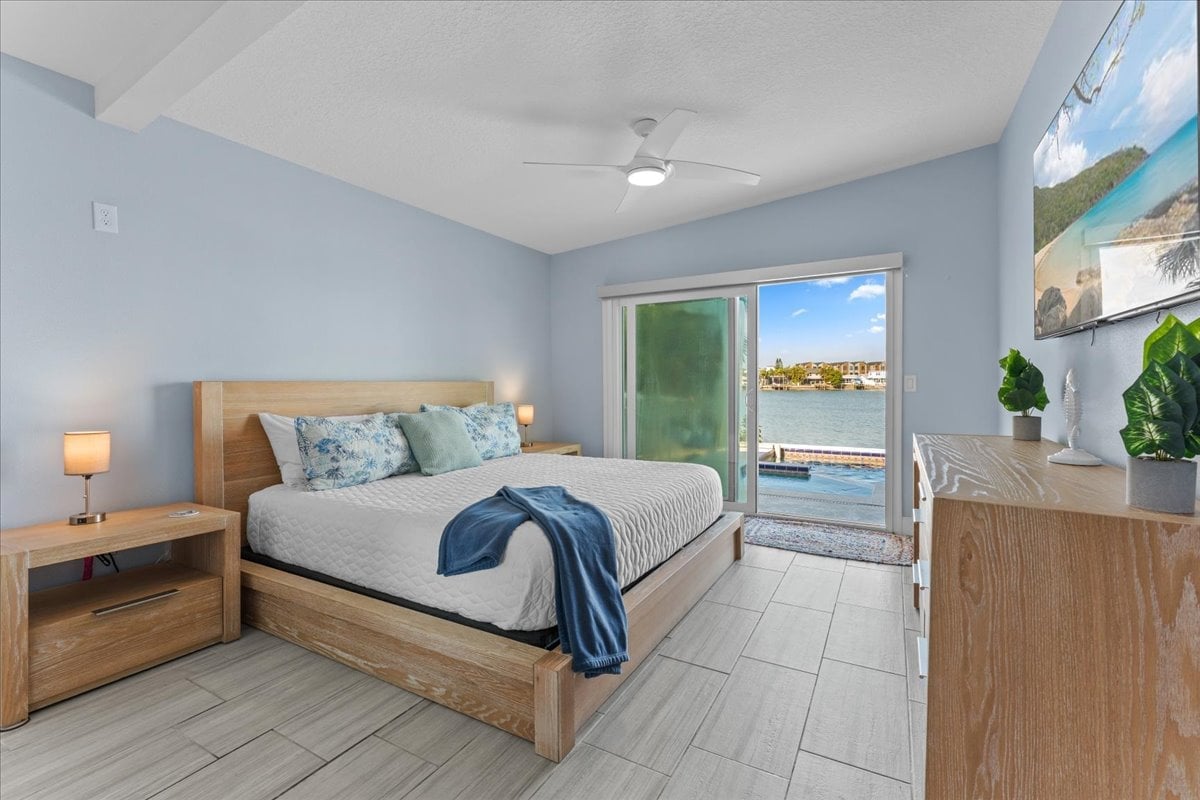
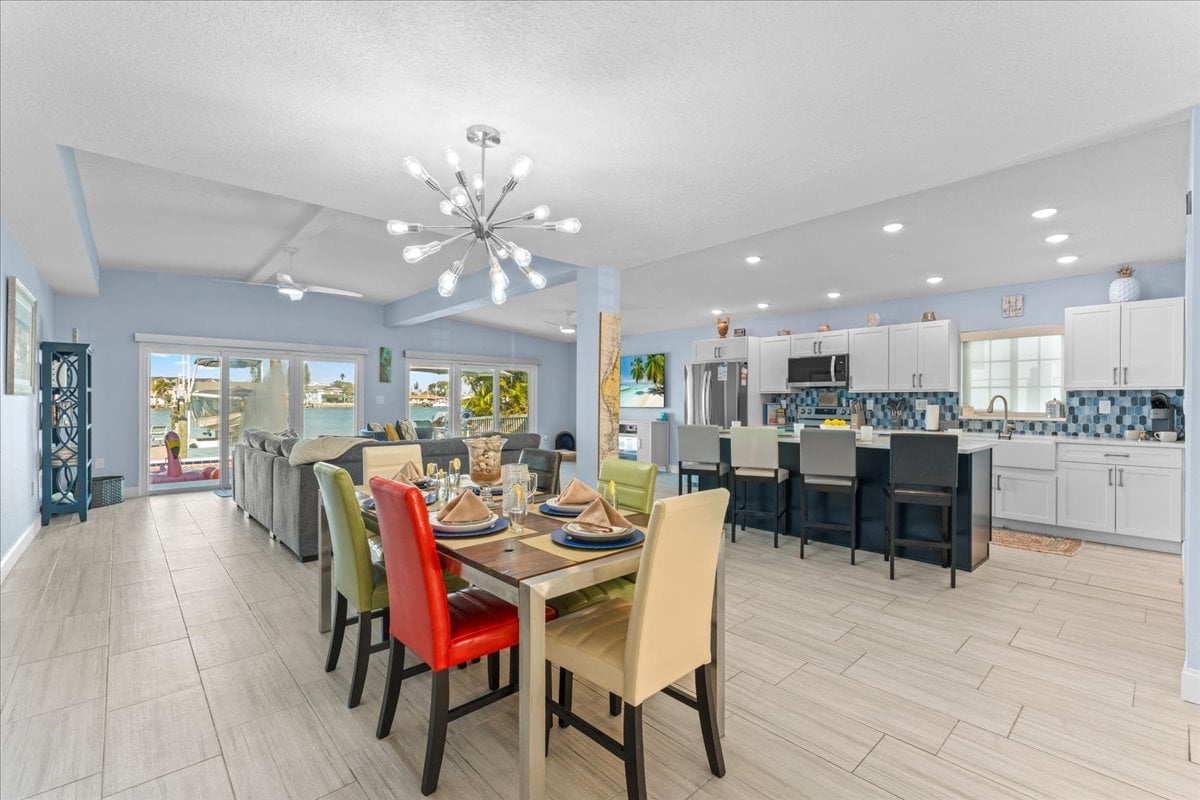
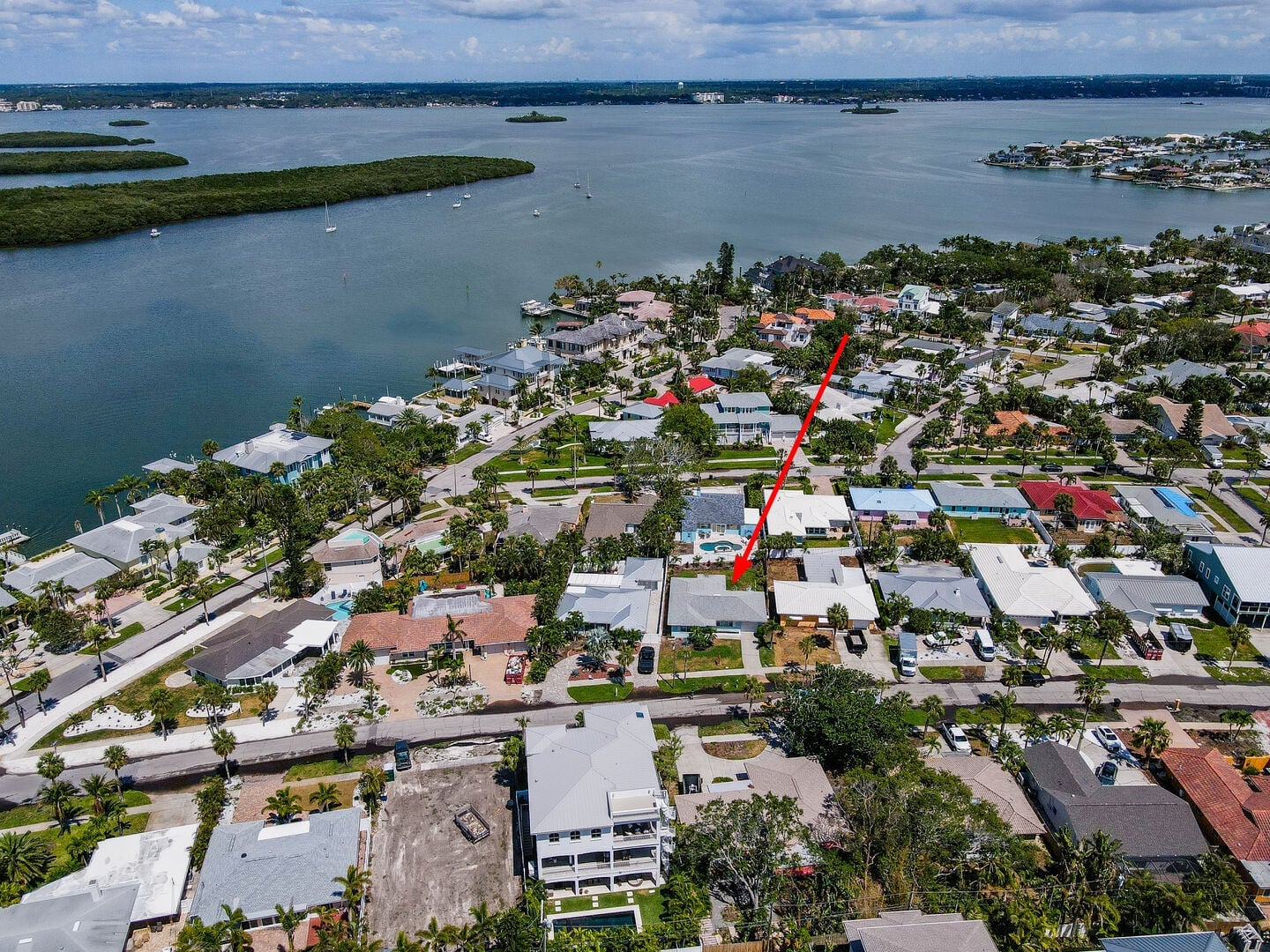
Four homes close to the water
If watching wildlife is part of your trip, stay somewhere you can see the water from the house.
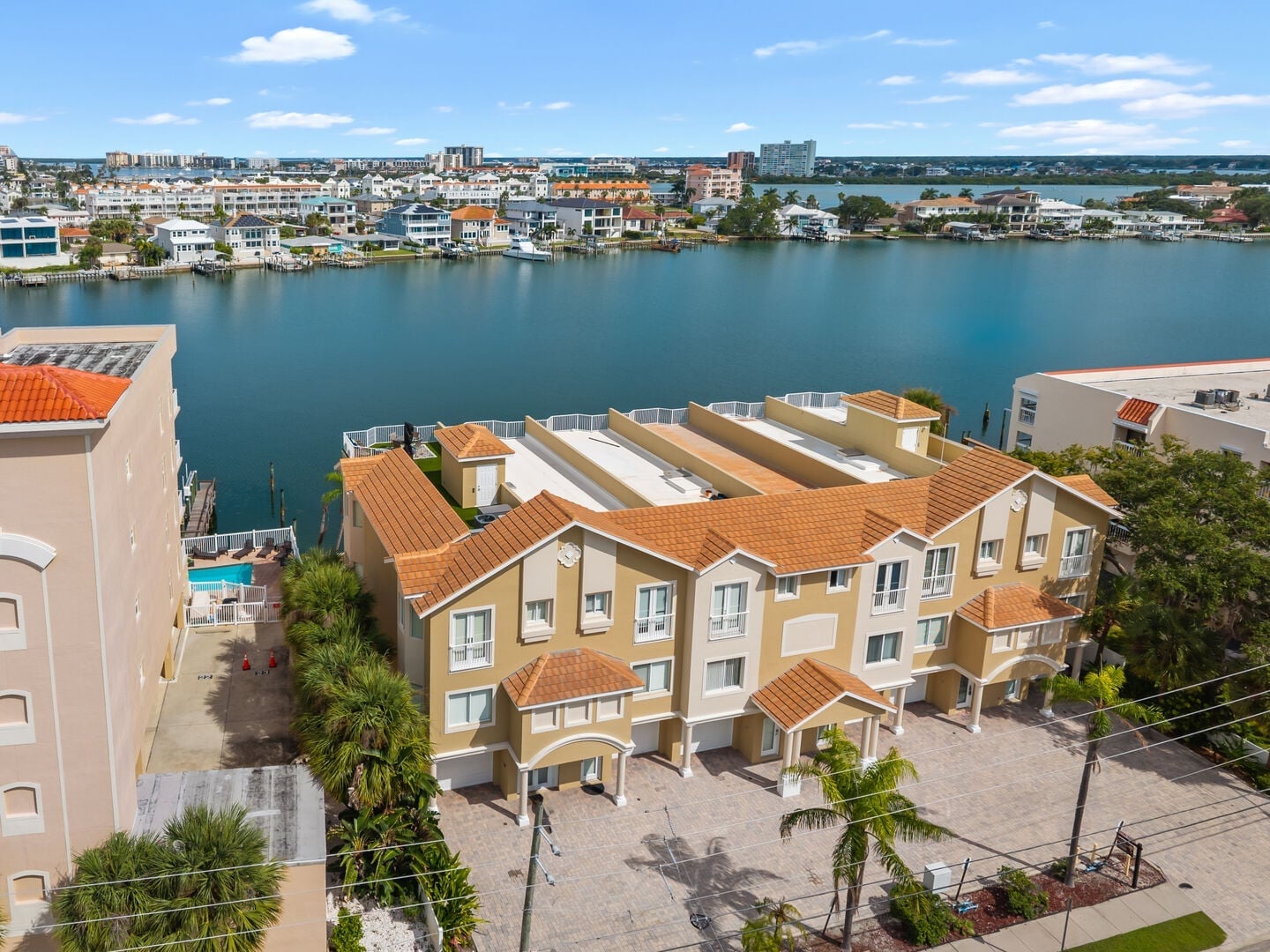
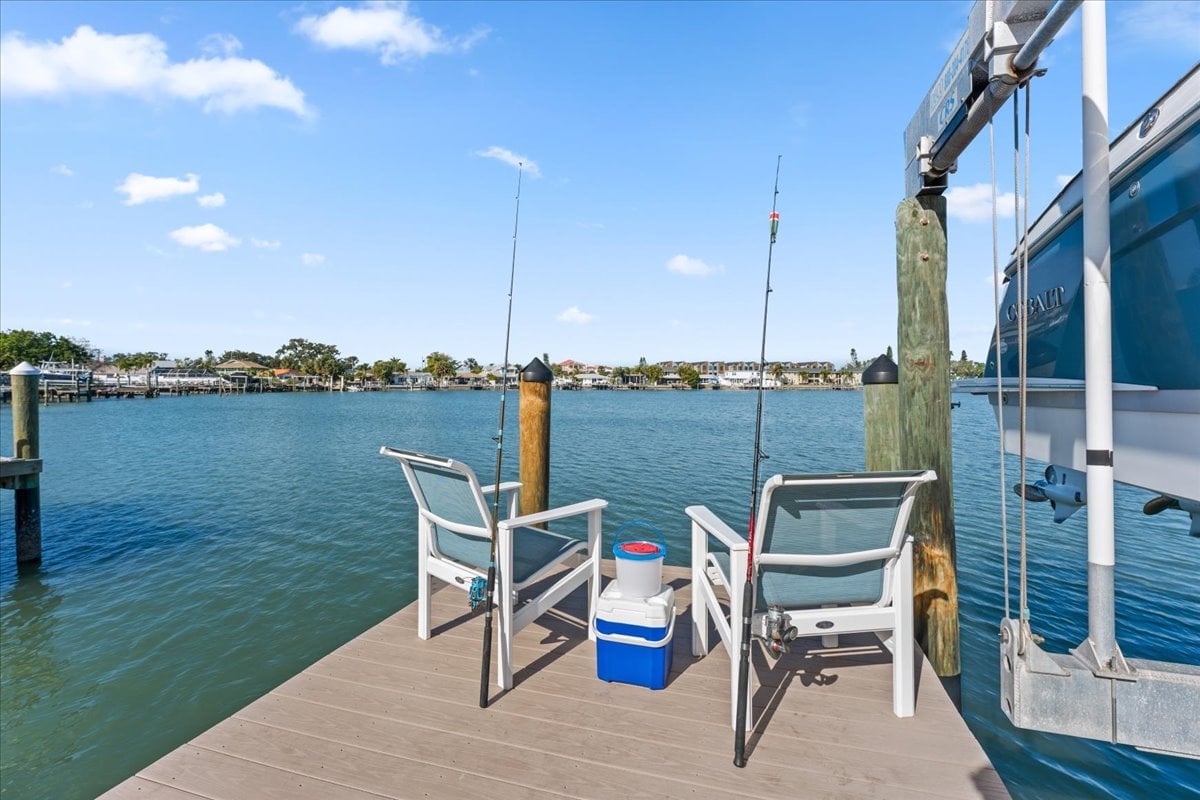
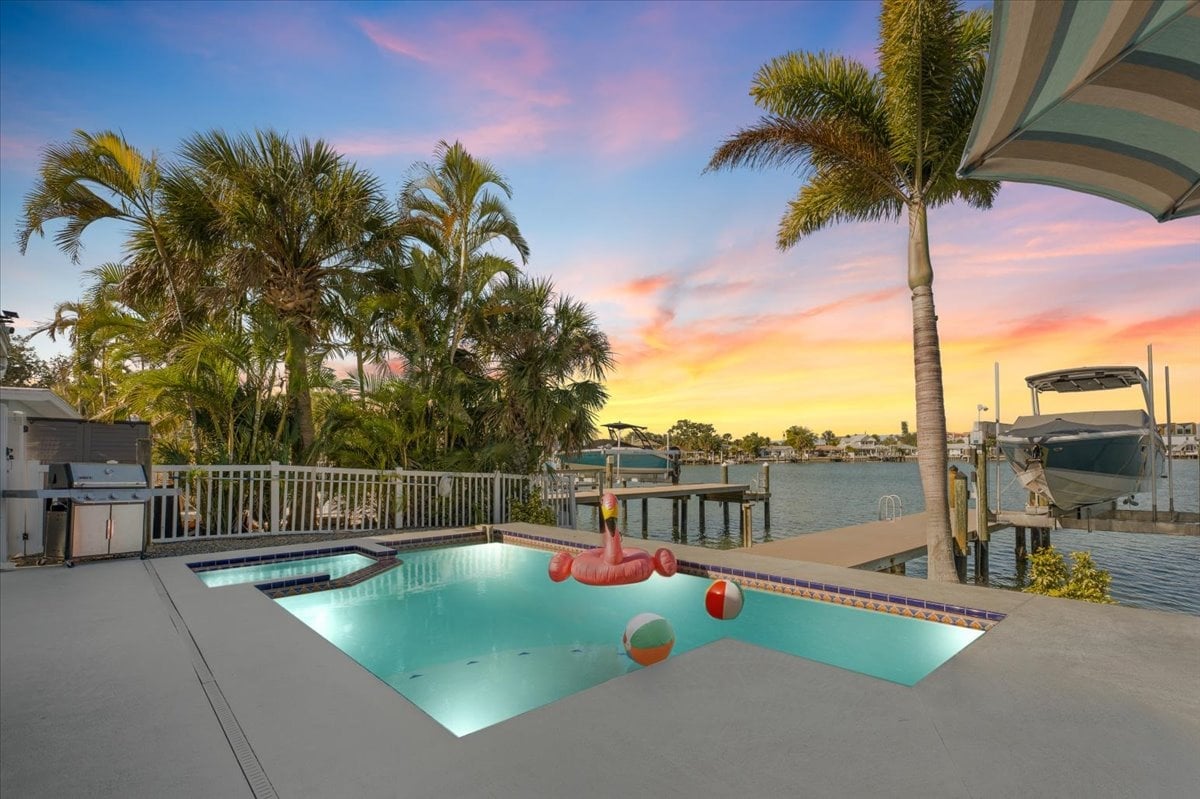
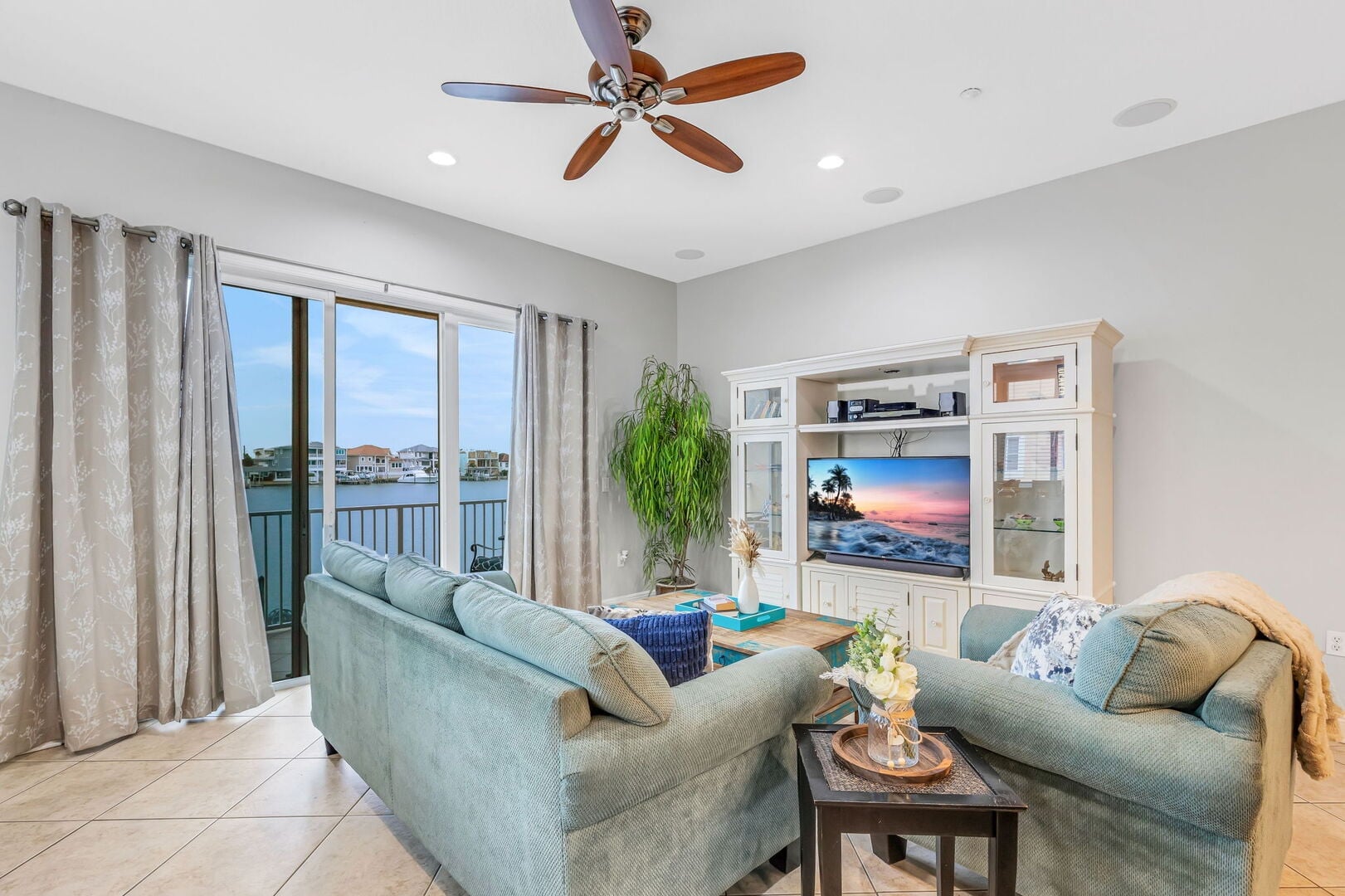
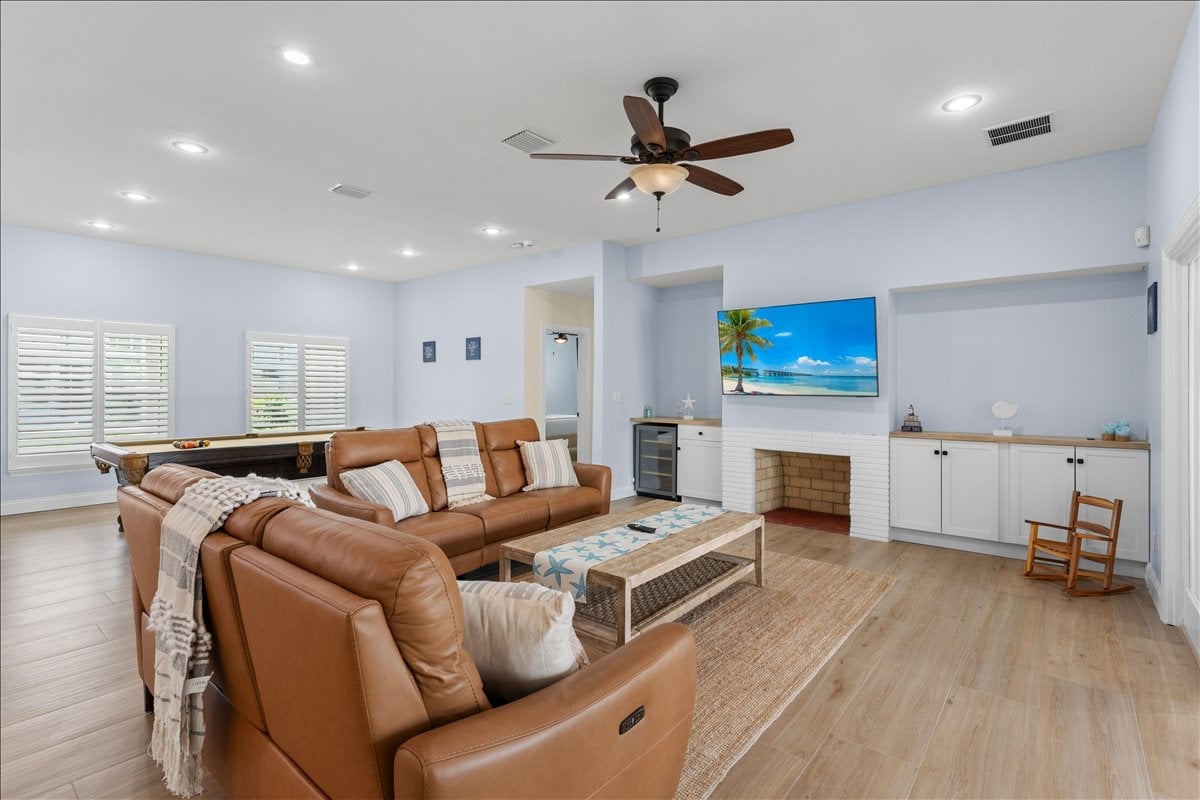
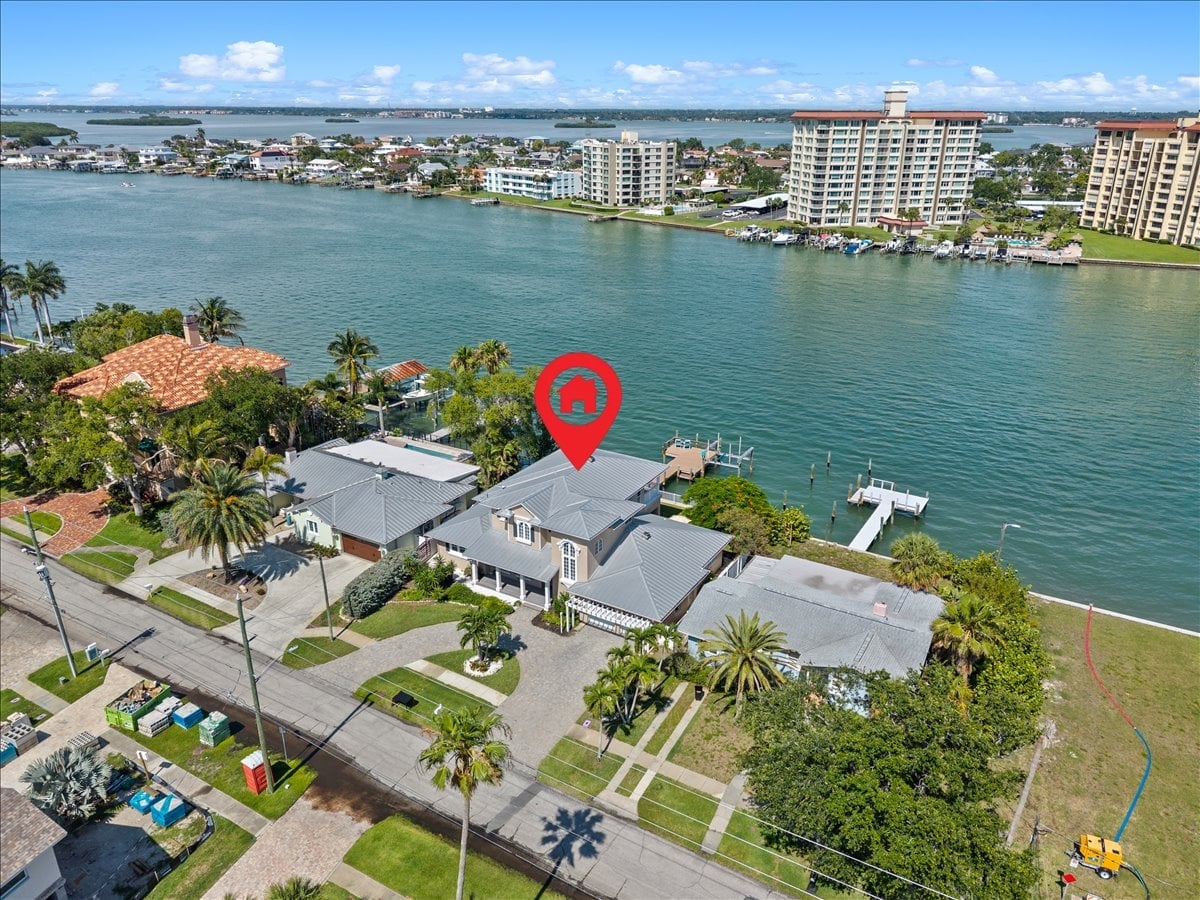
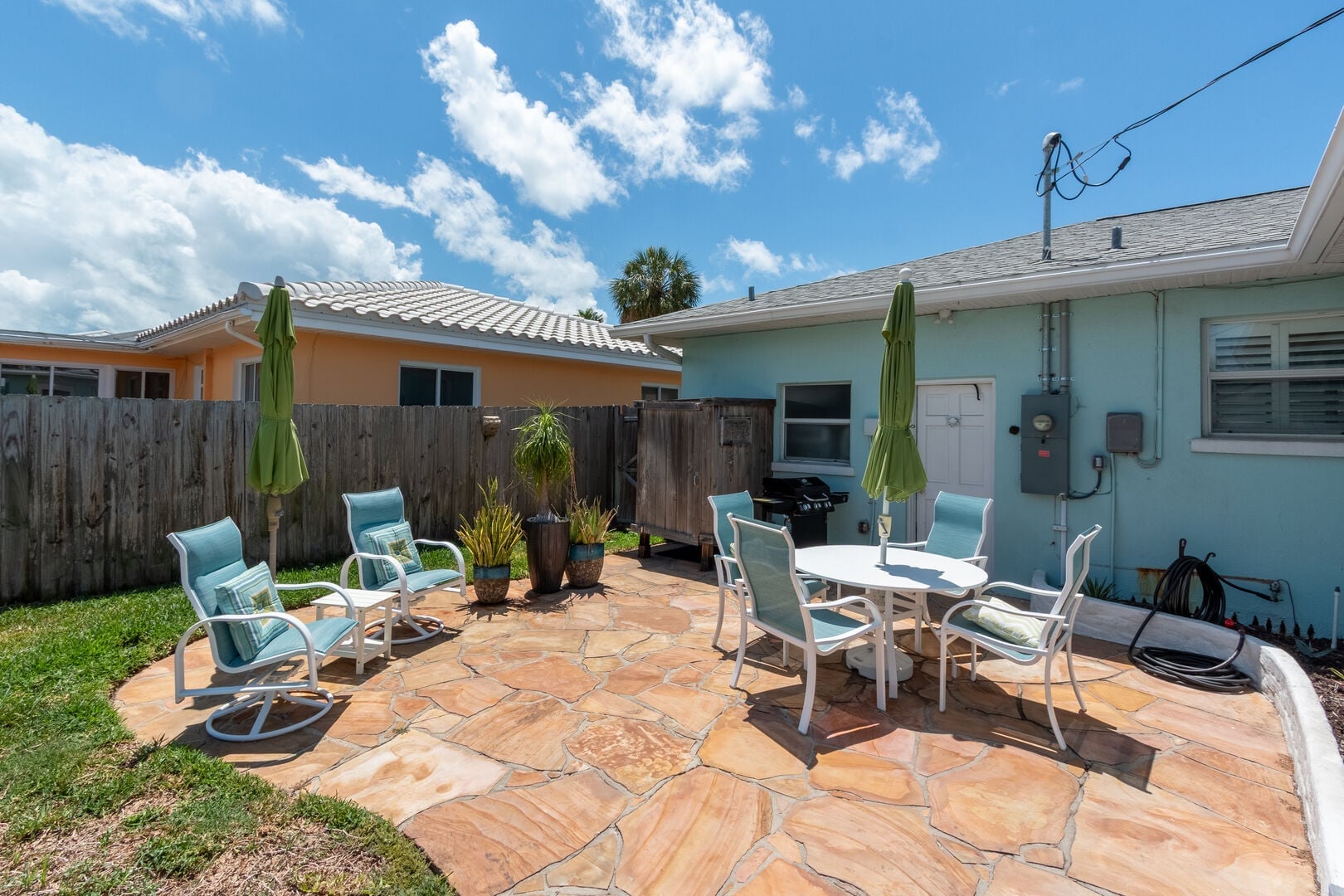
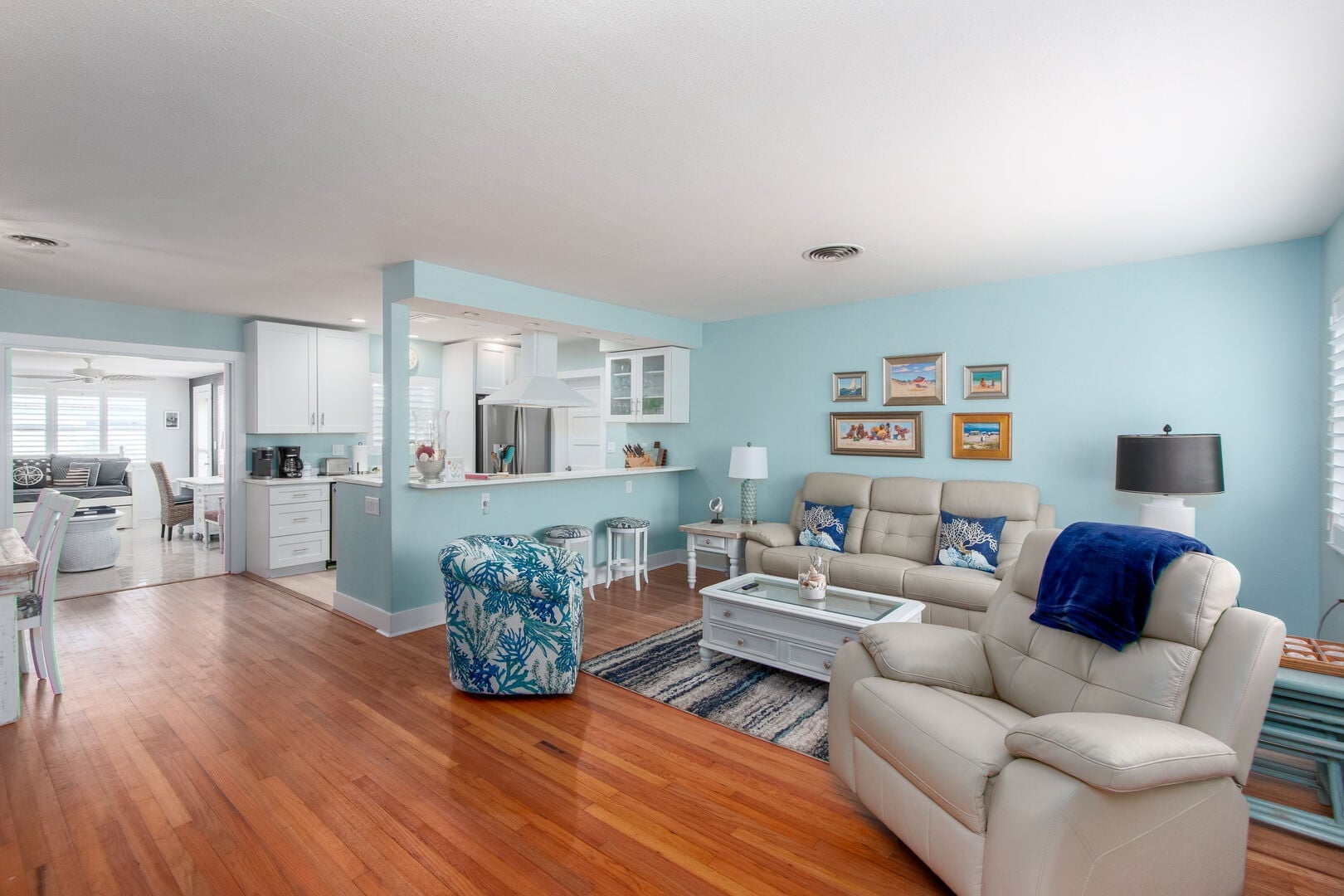
Bayway Luxury Waterfront Townhome on Clearwater Beach has a private rooftop terrace and balconies over the bay, and the listing mentions dolphins and manatees in the surrounding waterways. Water Lover’s Paradise in Indian Rocks Beach sits on a quiet cove with a heated pool and a private dock, where guests often report seeing dolphins and manatees. Bayfront Bliss is a five bedroom waterfront home on Clearwater Bay with a private dock, decks with wide water views and room for a big family. Seahorse Cottage, in the quiet north end of Clearwater Beach, comes with bikes and kayaks for guests.





Questions we get asked
When is the best time to see manatees near Clearwater Beach?
From November through March, on the coldest days. Manatees gather at warm water refuges when the water cools, and Tampa Electric says that when the water drops below 68 degrees Fahrenheit you are likely to see many of them at its Manatee Viewing Center.
Is the Manatee Viewing Center free?
Yes. Admission and parking at Tampa Electric’s Manatee Viewing Center in Apollo Beach are free. It is open daily from November 1 to April 15, 10 am to 5 pm, and closed on Thanksgiving Day, Christmas Day and Easter.
Can you swim with manatees at Three Sisters Springs in winter?
Not from the boardwalk side, and not inside the springs during manatee season. In water access is by boat or paddle craft only, paddle craft are allowed inside the springs only from April 1 to November 14, and the U.S. Fish and Wildlife Service can close in water access in very cold weather. In winter, the boardwalk is the way to see them.
Can I touch or feed a manatee?
No. Touching, feeding or giving water to manatees is treated as harassment under state and federal law. Watch quietly from a distance and let them behave naturally.
Can you recommend a home near the water for a winter trip?
Yes. Call us at (727) 449-2700 or email [email protected] with your dates and group, and we will suggest homes on the bay or a short walk from the beach.
Your winter getaway
Gentle Giants by Day, Gulf Sunsets by Night
Find a home near the water, then spend a cool winter morning with the manatees. Questions? Email [email protected].
See you on the sand.